Where the Giants of Restaurant Coffee Came From—and Where They Are Today
For decades, the American foodservice coffee business operated quietly behind the scenes. While consumers recognized brands like Folgers, Maxwell House, and Starbucks, millions of cups served in restaurants, hotels, hospitals, convenience stores, and corporate dining rooms came from companies few consumers had ever heard of.
As someone who spent more than 35 years in the coffee industry, I watched many of these companies compete fiercely for restaurant accounts. Salespeople didn’t just sell coffee—they sold brewing equipment, trained servers, repaired machines, and became trusted advisors to restaurant owners.
Many of these companies shaped the modern coffee industry, and while some remain family-owned, others have merged or disappeared into larger organizations.
My Perspective from 35+ Years in the Coffee Business
During my 35-plus years in the coffee industry, I had the privilege of working with restaurants, hotels, healthcare facilities, and institutions across the Southeast. I watched America’s foodservice coffee business evolve from regional family-owned roasters competing one customer at a time into today’s national beverage companies.
I called on many of the same customers these legendary companies served. Some were competitors, some became business partners, but all shared a common goal: helping operators serve a consistently great cup of coffee. Looking back, it’s remarkable to see how much the industry has changed through mergers, acquisitions, and advances in brewing technology.
This article is more than a history lesson for me—it’s a look back at an industry and the people who helped shape my career.
The Golden Age of Foodservice Coffee
From the 1950s through the early 1990s, foodservice coffee was built around route sales.
A representative visited restaurants weekly to:
- Deliver freshly roasted coffee
- Maintain brewing equipment
- Train staff
- Replace worn equipment
- Build long-term relationships
Success wasn’t determined by flashy advertising—it was earned one restaurant at a time.
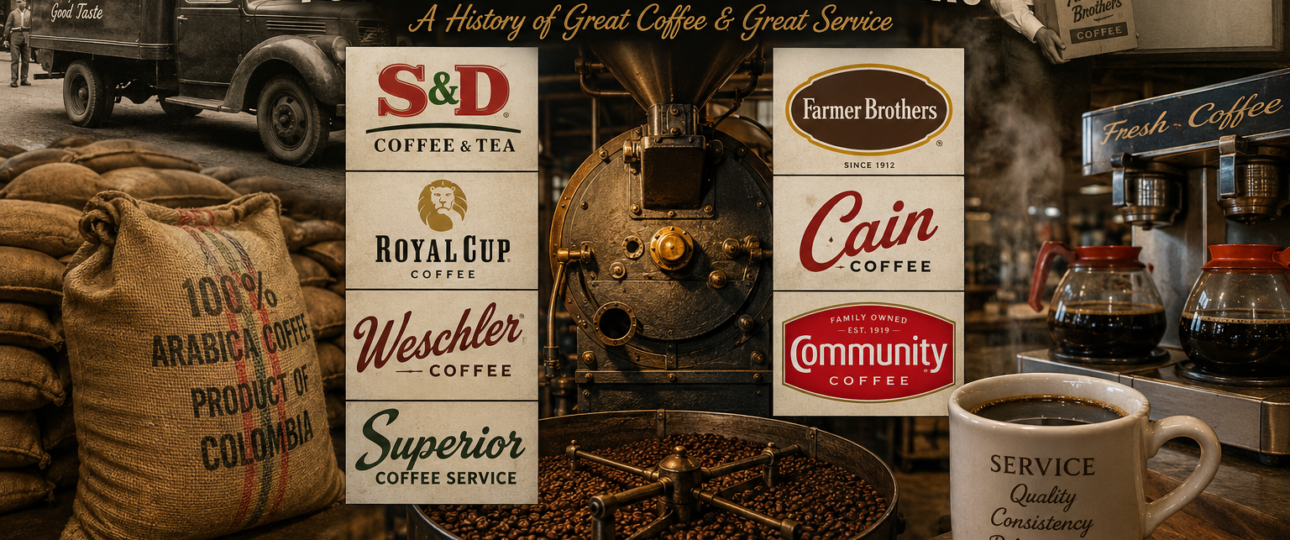
Here are some of the companies that helped build America’s foodservice coffee industry.
S&D Coffee
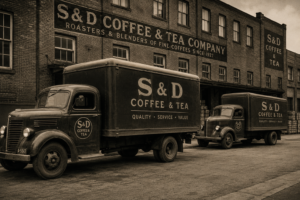
S&D Coffee built one of America’s largest restaurant coffee distribution networks before becoming part of Westrock Coffee.
Founded in 1927 in North Carolina, S&D Coffee became one of America’s largest foodservice coffee companies.
Its greatest strength was supplying:
- Restaurants
- Hotels
- Hospitals
- Convenience stores
- Fast-food chains
Unlike many competitors, S&D expanded beyond coffee into beverage concentrates, teas, cappuccino mixes, and frozen beverages.
Where are they today?
S&D merged with Cott Corporation’s coffee business in 2017 to form Westrock Coffee Company. Today, the business is part of one of North America’s largest integrated coffee and beverage suppliers serving national restaurant chains and convenience stores.
Royal Cup Coffee
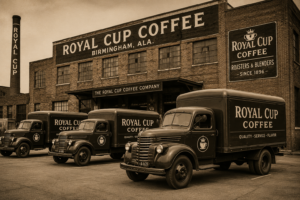
Throughout my years in the foodservice coffee industry, Royal Cup was known as a respected competitor with a strong commitment to customer service. Companies like Royal Cup helped define an era when success was built on personal relationships, dependable route service, and a consistently great cup of coffee.
Founded in Birmingham, Alabama, in 1896, Royal Cup has always emphasized premium restaurant and hospitality coffee.
For generations they became synonymous with:
- Hotels
- Fine dining
- Country clubs
- Healthcare
- Office coffee
Royal Cup built its reputation on exceptional customer service and route delivery.
Where are they today?
Royal Cup has experienced remarkable growth in recent years. In 2026 the company completed its acquisition of Farmer Brothers, creating one of the largest foodservice beverage platforms in North America while remaining headquartered in Birmingham.
Weschler Coffee
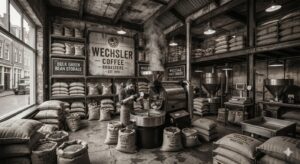
Weschler Coffee was once a respected regional foodservice coffee roaster serving restaurants throughout portions of the eastern United States.
Known for:
- Personalized service
- Restaurant expertise
- Traditional roasting
Like many regional roasters, increasing national competition and industry consolidation eventually reduced its independent presence.
Today the Weschler name is largely part of coffee history, remembered primarily by long-time restaurant operators and industry veterans.
Where are they today?
Weschler was accquired by Sara Lee Coffee and Tea in 1999
Superior Coffee
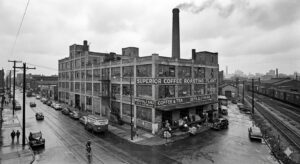
Superior Coffee Company – Chicago, Illinois
For decades, Superior Coffee was a familiar name in America’s foodservice and office coffee industry. From its Chicago roasting operations, the company supplied restaurants, offices, healthcare facilities, and institutions with freshly roasted coffee and dependable service before becoming part of the Sara Lee Coffee & Tea family.
Superior Coffee: The Chicago Pioneer That Helped Shape America’s Foodservice Coffee Industry
For much of the twentieth century, Superior Coffee stood among the most influential names in America’s foodservice coffee business. Headquartered in Chicago, Illinois, Superior built its reputation by providing dependable, freshly roasted coffee and exceptional customer service to restaurants, hotels, hospitals, office buildings, and institutional foodservice operations throughout the United States.
While consumers often recognized grocery store brands, Superior focused on serving businesses. Its success came not from television advertising but from thousands of route sales representatives who visited customers weekly, delivering coffee, maintaining brewing equipment, and ensuring every cup met the company’s quality standards.
A Leader in Foodservice and Office Coffee
Superior Coffee recognized early that serving commercial customers required far more than simply roasting coffee. The company developed a complete beverage service program that included:
- Freshly roasted coffee
- Commercial brewing equipment
- Preventive maintenance
- Employee training
- Beverage planning
- Tea, cocoa, and specialty beverages
- Office coffee service
This full-service approach helped restaurants maintain consistency while allowing operators to focus on serving their guests.
Building Relationships with National Hotel Chains
As the American hospitality industry expanded during the 1960s, 1970s, and 1980s, hotel companies demanded suppliers capable of delivering consistent coffee quality across multiple locations.
Superior Coffee became a significant supplier within this growing market, serving numerous hotels, restaurants, and institutional accounts across the country. Companies in the hospitality industry—including major brands such as Hyatt, Hilton, Marriott, Sheraton, and Holiday Inn—often relied on large national foodservice coffee providers like Superior, S&D Coffee, Farmer Brothers, Royal Cup, and others to support portions of their operations. Contract awards frequently varied by region, management company, and time period, making competition among suppliers especially intense.
The ability to provide dependable service across hundreds of properties helped establish Superior as one of the industry’s most respected foodservice coffee companies.
Beyond Hotels
Superior Coffee also supplied coffee to a wide variety of commercial foodservice operations, including:
- Hospitals and healthcare systems
- Colleges and universities
- Manufacturing plants
- Corporate cafeterias
- Office buildings
- Senior living communities
- Restaurant chains
- Independent restaurants
For many operators, Superior became more than a coffee supplier—it became a trusted business partner.
The Route Sales Tradition
One of Superior’s greatest strengths was its nationwide network of route sales representatives.
Every week, these professionals would:
- Deliver freshly roasted coffee
- Clean and repair brewing equipment
- Adjust brewing recipes
- Train restaurant staff
- Recommend new products
- Build long-term relationships with customers
This high-touch service model became the standard for the foodservice coffee industry and was adopted by many competing companies.
Becoming Part of Sara Lee Coffee & Tea
Superior Coffee’s reputation eventually attracted the attention of larger foodservice companies. It became part of Sara Lee Coffee & Tea, strengthening Sara Lee’s position in the commercial coffee market.
Under Sara Lee, Superior’s heritage of customer service, nationwide distribution, and commercial expertise continued to influence the company’s foodservice operations.
The Legacy Lives On
The next major industry shift came in 2008, when Farmer Brothers acquired Sara Lee’s U.S. direct-store-delivery foodservice coffee business. Many former Superior Coffee routes, employees, and customer relationships became part of Farmer Brothers, preserving decades of expertise while continuing to serve restaurants and institutions across the country.
Today, although the Superior Coffee name is largely part of coffee history, its influence remains visible throughout the foodservice industry. The company’s emphasis on quality roasting, dependable route service, equipment support, and long-term customer relationships helped establish many of the service standards still followed by commercial coffee suppliers.
☕ Rick Remembers
During my years in the coffee industry, Superior Coffee was always recognized as one of the premier national competitors. Whether calling on independent restaurants, hospitals, or large hospitality accounts, Superior’s reputation for dependable service and quality coffee was well known. Companies like Superior helped define an era when success wasn’t measured only by the coffee in the cup—it was measured by the relationships built with customers, the reliability of route service, and the commitment to helping operators succeed.
Farmer Brothers
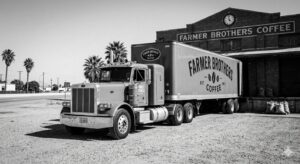
Founded in Los Angeles in 1912, Farmer Brothers became one of the biggest names in restaurant coffee west of the Mississippi.
Unlike many competitors, they also sold:
- Tea
- Spices
- Soup bases
- Culinary products
- Beverage equipment
Farmer Brothers expanded aggressively through acquisitions, including Sara Lee’s direct-store-delivery coffee business, Boyd Coffee, China Mist Tea, and several regional brands.
Where are they today?
The biggest recent industry story came in 2026 when Royal Cup acquired Farmer Brothers, combining two legendary foodservice coffee companies into one organization.
Cain Coffee
Many coffee professionals remember Cain Coffee as a respected regional foodservice supplier serving restaurants and institutional accounts.
Cain built a loyal customer base through:
- Dependable service
- Competitive pricing
- Strong local relationships
Its brand eventually became part of broader industry consolidation, with the Cain’s name later residing within the Farmer Brothers portfolio before Farmer Brothers itself was acquired by Royal Cup in 2026.
Community Coffee
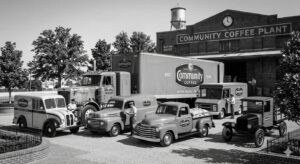
Community Coffee
Founded in Baton Rouge in 1919, Community Coffee remains one of America’s great family-owned coffee success stories.
While many know Community through grocery stores, the company has also built an impressive foodservice operation supplying:
- Restaurants
- Hotels
- Schools
- Healthcare
- Offices
Community continues to expand while remaining privately owned by the Saurage family.
Industry Consolidation Changed Everything
Beginning in the 1990s, several major trends transformed foodservice coffee:
- National restaurant chains demanded nationwide service.
- Independent restaurants increasingly joined purchasing cooperatives.
- Equipment became more sophisticated.
- Margins tightened.
- Companies merged to gain economies of scale.
Many respected regional roasters either:
- merged,
- were acquired,
- or shifted their focus to specialty coffee.
The result is a much smaller number of very large national suppliers serving thousands of foodservice locations.
The Lasting Legacy
Even though many of these names have changed ownership, their influence remains enormous.
They helped establish the service model that still defines foodservice coffee today:
- Fresh roasted coffee
- Professional brewing systems
- Preventive equipment maintenance
- Employee training
- Long-term customer relationships
Long before specialty coffee became fashionable, these companies were delivering millions of cups every day to America’s diners, truck stops, hospitals, hotels, and restaurants.
For those of us who worked in the industry, these weren’t just competitors—they were part of an era when success was built one customer, one route, and one perfectly brewed pot of coffee at a time.
About the Author
Rick Pruitt spent more than 35 years in the coffee industry before becoming founder of The Caffeinated Wanderer Cruises & Tours. His unique perspective combines decades of coffee industry experience with a passion for travel, coffee culture, and discovering exceptional cafés around the world.