Most of us see a roasted coffee bean and think of aroma, flavor, and that wonderful first cup of the morning. But before that bean reaches your grinder, something remarkable happens.
A green coffee bean goes through an intense transformation involving heat, moisture, pressure, chemistry, and the skill of the coffee roaster.
In only a matter of minutes, a dense green seed is transformed into the aromatic brown coffee bean we recognize. Along the way, hundreds of chemical compounds are created or altered, helping produce the flavors and aromas we associate with chocolate, caramel, fruit, nuts, spices, and countless other characteristics.
So, what exactly happens inside that coffee bean?
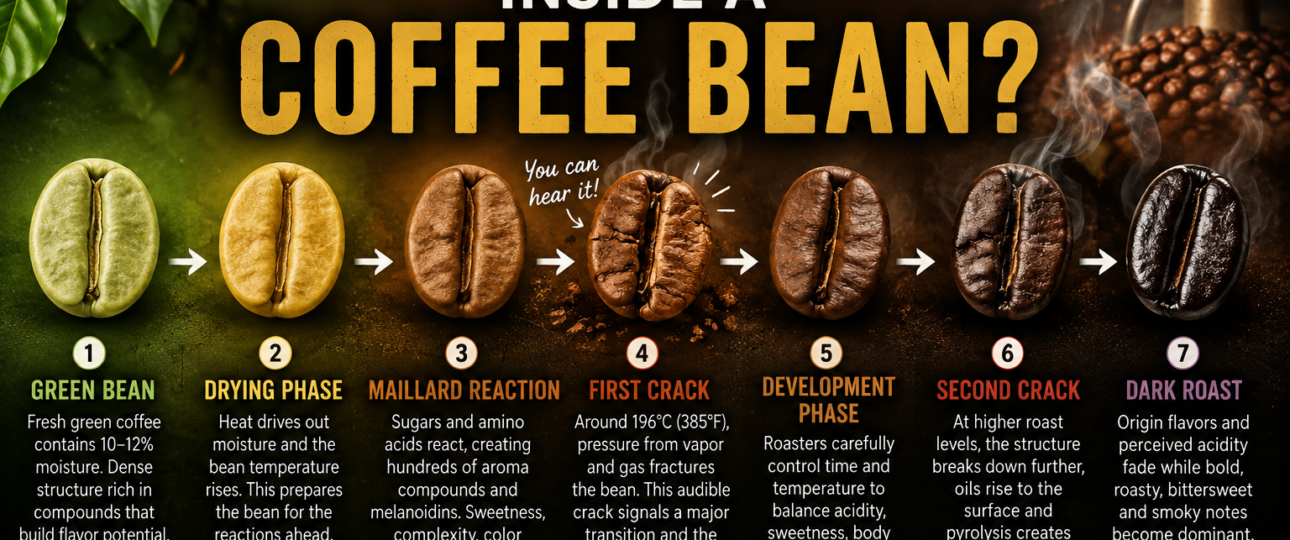
1. It Begins With the Green Bean
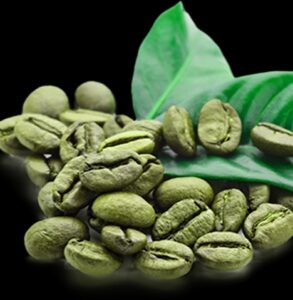
Before roasting, coffee looks very different from what you pour into your grinder.
Fresh green coffee typically contains approximately 10–12% moisture. The bean has a dense cellular structure containing carbohydrates, proteins, lipids, organic acids, and other compounds.
Think of these as the raw materials from which the coffee’s eventual flavor profile can develop.
The coffee’s variety, growing altitude, soil, climate, harvesting, and processing have already influenced its potential. The roaster’s job isn’t simply to make the bean brown—it is to determine how that potential will be expressed.
What it means in your cup: Great roasting can’t manufacture quality that wasn’t present in the green coffee, but it can dramatically influence which characteristics you ultimately taste.
2. The Drying Phase
Once green coffee enters the roaster, heat begins driving moisture from the bean.
The bean temperature rises as free water evaporates. During this stage, the coffee gradually changes appearance and begins moving from green toward yellow.
It may not be the most dramatic portion of the roast, but it prepares the bean for the important chemical reactions ahead.
What it means in your cup: How heat is managed from the beginning can influence how evenly the coffee develops later in the roast.
3. The Maillard Reaction: Where Flavor Gets Interesting
Now the transformation becomes especially fascinating.
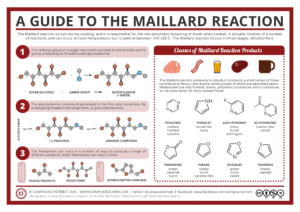
As the bean continues heating, reducing sugars react with amino acids through what is known as the Maillard reaction.
If you’ve ever smelled bread browning in the oven or enjoyed the crust on a properly seared steak, you’ve experienced the results of similar chemistry.
In coffee, Maillard reactions contribute significantly to the development of color, aroma, sweetness, body, and flavor complexity. Numerous aroma and flavor compounds develop as the bean progresses through this stage.
The bean becomes progressively browner, and the familiar aroma of roasted coffee begins emerging.
What it means in your cup: Many of the caramel-like, toasted, nutty, chocolate-like, and other complex characteristics we associate with roasted coffee are influenced during this part of the roast.
4. First Crack — When the Bean Speaks
Then something happens that coffee roasters listen for very carefully.
The beans begin to crack.
At approximately 196°C (385°F)—although the exact temperature varies depending on the coffee, equipment, and measurement method—pressure from water vapor and gases builds inside the bean.
Eventually, the expanding bean’s cellular structure can no longer contain that pressure.
Pop!
This audible event is known as first crack.
It can sound a little like popcorn popping and represents a major physical and chemical transition during roasting.
For the roaster, first crack is an important milestone. The coffee is approaching the stage where careful decisions about final roast development become especially important.
What it means in your cup: What happens after first crack can dramatically influence the balance between acidity, sweetness, body, roast character, and the coffee’s origin flavors.
5. The Development Phase
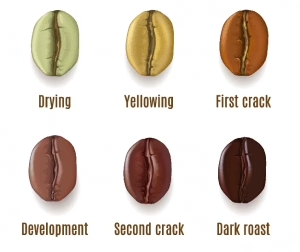
After first crack comes one of the most critical periods of the roast: development.
The roaster carefully manages heat, airflow, time, and the coffee’s rate of temperature change.
Even relatively small adjustments can noticeably influence the finished cup.
Shorter or lighter development may preserve more brightness and origin-specific characteristics. Additional development can emphasize sweetness, body, caramelization, and increasingly roast-driven characteristics.
The objective isn’t simply to make coffee lighter or darker.
It’s about balance.
A skilled roaster is trying to reveal the most desirable qualities already present in that particular coffee.
What it means in your cup: This is one reason two roasters can purchase coffee from the same origin—or even the same farm—and produce coffees that taste surprisingly different.
6. Second Crack — Entering Darker Roast Territory
Continue roasting and another audible stage may eventually arrive: second crack.
The bean’s cellular structure continues breaking down. Oils may migrate toward the surface, and pyrolytic reactions become increasingly important.
As roasting progresses further, darker roast characteristics become more pronounced.
The flavors created by roasting increasingly compete with—and eventually can overshadow—the characteristics associated with the coffee’s origin.
Acidity generally becomes less pronounced, while smoky, bittersweet, roasted, and carbonized characteristics can become stronger depending on how far the roast progresses.
What it means in your cup: Darker roasting doesn’t simply make coffee “stronger.” It changes the flavor balance and can reduce some of the distinctions between individual origins.
Light Roast vs. Dark Roast: Which Is Better?
Neither.
And that’s part of the fun.
A lighter roast may highlight floral, fruity, citrus, tea-like, or origin-specific characteristics.
A medium roast might emphasize balance, sweetness, caramel, chocolate, and body.
A darker roast may deliver deeper roasted, bittersweet, smoky, and heavier flavor characteristics.
The “best” roast depends on the coffee itself—and, most importantly, what you enjoy drinking.
Coffee doesn’t have to become complicated to be appreciated.
But understanding what happens during roasting can make that next cup a little more interesting.
There’s a Whole Journey Inside That Bean
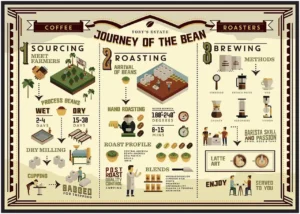
The next time you pick up a coffee bean, remember that you’re holding the result of agriculture, chemistry, thermodynamics, and craftsmanship.
The farm gave the bean its potential.
Processing helped shape it.
The roaster then made a series of decisions—from heat application and airflow to development time and final roast degree—that helped determine what would eventually reach your cup.
And then there’s one final person involved:
You.
How you grind it, brew it, and enjoy it completes the journey.
That’s what makes coffee endlessly fascinating.
There’s an entire journey hidden inside every bean.
The Caffeinated Wanderer
Coffee has been part of my journey for decades, and travel has given me the opportunity to experience it in places around the world. Here at The Caffeinated Wanderer, we’ll continue exploring not only where coffee comes from, but what happens along the way to create the cup we enjoy every morning.
Where has your favorite cup of coffee taken you?
Share your favorite roast, origin, or coffee experience in the comments—and follow The Caffeinated Wanderer for more stories from the intersection of coffee and travel.