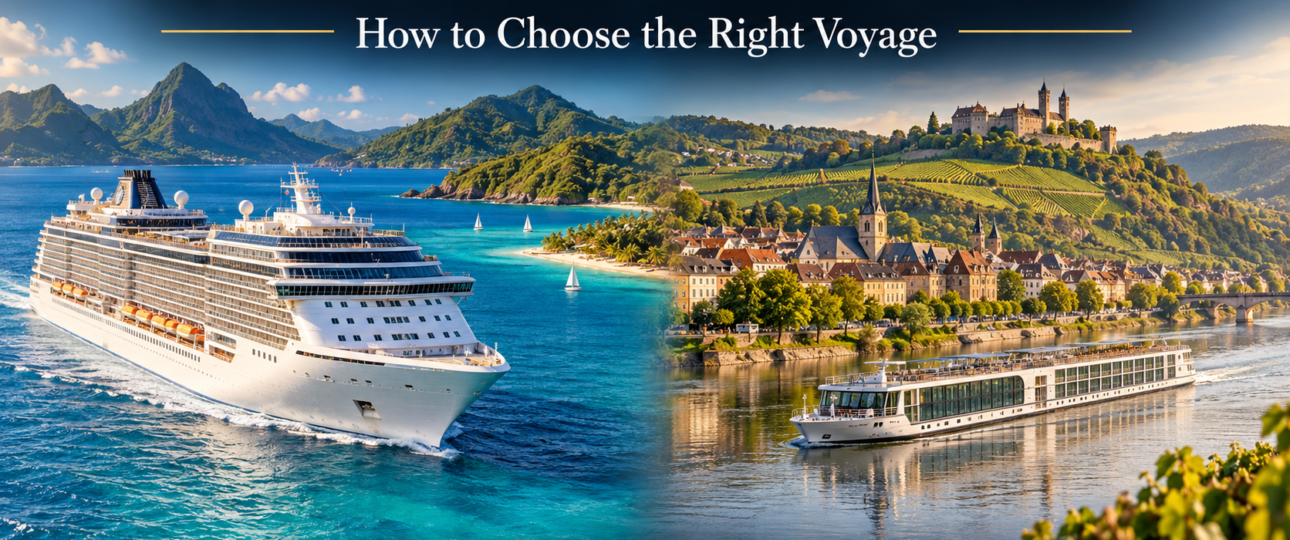
The core difference in the ocean cruise vs river cruise debate comes down to scale, setting, and pace. An ocean cruise offers a floating resort with endless dining and entertainment options across open water, while a river cruise provides an intimate, cultural journey through inland waterways where the destination remains in view all day. Choosing between them depends on whether you value variety and shipboard amenities or cultural immersion and effortless port access.
I still remember leaning over the railing of an ocean ship at six in the morning, watching the sunrise paint the Atlantic in shades of bruised violet and amber. The horizon stretched empty in every direction, immense and quiet. Two months later, I stood on the sun deck of a longship drifting along the Danube, close enough to shore that I could hear church bells ringing in a hillside village and smell woodsmoke drifting from kitchen chimneys.
Both journeys delivered wonder, but they felt like entirely different worlds. There is the cruise you plan – and then there is the cruise you actually experience. The vessel you step onto dictates how you wake up, how you dine, and how you encounter the world ashore.
Key Takeaways
- Ocean cruises prioritize onboard variety, featuring multiple specialty restaurants, theatrical entertainment, and resort amenities across open waters.
- River cruises emphasize cultural immersion, using smaller vessels that dock directly in city centers and include daily excursions in the base fare.
- Sea days define the ocean voyage rhythm, while river journeys feature active daily itineraries with constant riverbank scenery.
- Total vacation costs balance out differently: river cruises have higher upfront fares with widespread inclusions, whereas ocean lines offer lower entry prices with extra fees for shore excursions, Wi-Fi, and drinks.
Ocean Cruise vs River Cruise: The Direct Comparison
To help you weigh the fundamental differences at a glance, this breakdown contrasts the logistical and lifestyle elements of each voyage style.
| Feature | Ocean Cruise | River Cruise |
|---|---|---|
| Typical Passenger Count | 1,500 to 6,000+ guests | 100 to 190 guests |
| Primary Scenery | Open ocean, coastal horizons, sea days | Continuous shorelines, towns, castles, locks |
| Docking Location | Outer coastal docks, often industrial ports | City centers, historic piers, town quays |
| Base Inclusions | Lodging, main dining, standard entertainment | Lodging, meals, wine/beer at dinner, daily excursion |
| Motion & Seasickness | Possible swells, controlled by hull stabilizers | Negligible movement, flat inland waterways |
River Cruise vs Ocean Cruise: How Are They Different?
The structural contrast between a river cruise vs ocean cruise begins with ship design and water depth. Ocean ships are massive architectural feats built to handle deep swells, hosting thousands of passengers across fifteen or more decks. A river ship is long, low, and sleek, custom-built to slip beneath bridge arches and navigate narrow canal locks.
Scale shapes every hour you spend on board. On a mid-sized ocean ship, walking from your cabin to the aft pool deck can take five minutes of hallway navigation and an elevator ride. You share that space with thousands of fellow travelers, which creates an energetic community atmosphere. On a riverboat, you can walk from your stateroom to the lounge in forty seconds flat. You recognize the hotel manager, the bartender knows your evening cocktail by day two, and the entire vessel feels like a boutique lodge.
Geography determines the daily view. On an ocean sailing, you might spend two consecutive sea days surrounded by deep blue water. That solitude brings deep relaxation, letting you unplug from land completely.
A river cruise itinerary, by contrast, never loses sight of land. As your riverboat glides between stops, medieval ruins, vineyards, and working farms slide by your window. The voyage focuses entirely on the landscape unwinding along the banks, keeping you grounded in the heart of the country you came to see.
According to a global market study, ocean cruises held the largest share of the global cruise market at 79.7% in 2025 (Grand View Research). That market dominance reflects the massive capacity and worldwide appeal of mega-resort ships. Yet travelers looking for intimate cultural access increasingly turn their attention toward European and Asian rivers.
What’s Included? Breaking Down the Real Cost
A river cruise generally bundles daily walking tours, beer and wine with lunch and dinner, Wi-Fi, and port fees into the primary ticket price. Ocean cruise pricing usually follows an unbundled structure, where the entry fare covers your stateroom, main restaurant meals, and theatrical shows, leaving shore excursions, specialty drinks, and onboard gratuities as add-ons.
Understanding your total out-of-pocket spend requires peeling back the cruise fare structure.
The River Cruise Model
When you book with a leading river cruise line like Viking, your baseline payment covers nearly every practical daily need. In every port along the itinerary, the ship provides an included excursion led by a local guide. During lunch and dinner, the dining room servers pour regional wines and beers at no extra charge. Bottled water, specialty coffees, and Wi-Fi access are routinely included.
Because the ship carries fewer than two hundred guests, there is no pressure to upsell you on premium packages. You can step off the ship at the end of the week with a final onboard folio showing zero dollars, provided you skipped optional premium tours and spa appointments.
The Ocean Cruise Model
Large ocean lines often advertise jaw-dropping promotional rates, but the initial ticket functions like an admission pass to a floating resort. Once aboard, your basic dining room and buffet are included, along with fitness centers and Broadway-style performances.
However, spending can climb quickly:
- Shore excursions: Group tours in port routinely cost between seventy and two hundred dollars per person.
- Beverages: Soda, espresso, cocktails, and wine require a daily beverage package or individual billing.
- Specialty dining: Steakhouses, sushi bars, and Italian venues carry cover charges.
- Connectivity: Satellite Wi-Fi packages charge daily access fees per device.
When comparing an ocean cruise vs river cruise budget, look at the final cost per day. A river cruise ticket looks high upfront, but it represents the real total. An ocean cruise entry price appears low, but port fees, excursions, service charges, and onboard extras bring the bottom line much closer together.
Are River Cruises More Expensive Than Ocean Cruises?
River cruises are almost always more expensive on an upfront, per-night basis due to smaller passenger capacities and comprehensive inclusions. An entry-level river voyage typically costs significantly more per day than a mass-market ocean cruise, though luxury ocean lines close that pricing gap quickly.
The mathematics of river cruising simply do not allow for rock-bottom fares. A river ship carrying 180 passengers requires a full crew of chefs, navigators, and housekeepers to provide high-touch service. Because the ship cannot make up for discounted cabins by packing thousands of guests into casinos and retail shops, the cruise line must build operating costs directly into the cabin fare.
On a mega ocean ship carrying 4,000 travelers, economies of scale allow the cruise line to discount staterooms. They know that once guests board, ancillary spending takes over. Revenue pours in through the casino, duty-free retail, arcade games, poolside bars, and the specialty restaurant roster.
If you want a budget-friendly vacation where you stay in an interior stateroom, eat primarily in the main dining room, and explore ports on your own foot power, an ocean cruise offers value that a river ship cannot match. If you prefer transparent pricing where guided tours, regional wine, and transfers are built into one upfront invoice, the river cruise fare feels refreshingly simple.
Which Cruise Is Better for People Prone to Seasickness?
A river cruise is the clear choice for travelers prone to motion sickness because rivers do not produce ocean swells, waves, or rolling chop. River vessels travel through protected inland waterways where the water remains remarkably calm, eliminating the rocking sensation that triggers seasickness.
On an ocean voyage, motion is part of the territory. Modern ocean vessels feature massive computer-controlled hull stabilizers that reduce roll by up to eighty percent. On calm seas, these giant ships feel like solid ground.
Yet storms, crosswinds, and changing ocean currents can still generate noticeable movement. Crossing open ocean stretches like the Bay of Biscay, the Gulf of Alaska, or the Drake Passage will inevitably introduce rolling or pitching motions. If you are sensitive to movement, you may need motion-sickness patches, acupressure bands, or medications to enjoy the sea days.
On a river cruise, seasickness is virtually non-existent. You will feel minor engine vibration during docking maneuvers and gentle water displacement when passing through a canal lock. Aside from that, the ship glides along as smoothly as a passenger train moving along level tracks. You can set a full glass of water on your bedside table overnight without a drop spilling. For anyone whose fear of motion has kept them from booking a holiday on the water, the river offers absolute peace of mind.
Life on Board: Atmosphere, Cabins, and Entertainment
The daily rhythm of an ocean ship balances action and entertainment, while life on a river vessel centers on quiet relaxation, scenic viewing, and conversation.
Dining Traditions and Culinary Culture
Dining on a large ocean ship offers staggering choice. You might eat sushi on Monday, prime rib in an American steakhouse on Tuesday, fresh pasta in an Italian trattoria on Wednesday, and casual tacos by the pool deck on Thursday. The dining room operates on flexible dining schedules, letting you eat whenever your schedule allows.
On a river ship, the culinary focus turns to regional authenticity. There is typically one main restaurant and an intimate light-fare bistro in the lounge. Breakfast and lunch feature generous buffets paired with hot menu orders, while dinner is a single, sit-down event for all guests.
The executive chef regularly shops at local markets in the morning port, bringing fresh German pretzels, Austrian cheeses, or French berries straight into the galley. Tables are unassigned and open, encouraging you to share meals and swap travel stories with fellow guests every evening.
Cabins and Stateroom Space
Ship dimensions dictate cabin size:
- Ocean cruise staterooms: Ocean ships offer a massive spectrum of cabin categories. You can book an affordable interior room with no window, an oceanview cabin with a porthole, a standard veranda with a balcony, or an expansive two-story suite with private butler service. Bathrooms run compact in standard cabins, but layouts make clever use of square footage.
- River cruise cabins: Because river locks strictly constrain vessel width, river ship cabins run slightly smaller. There are no interior cabins; every room has an exterior window or a French balcony where sliding glass doors open directly to the water. Viking longships revolutionized this space by squaring off cabin corridors, creating true two-room suites with full verandas. Storage space is thoughtfully organized for hanging clothes and sliding suitcases beneath the bed frame.
Evening Entertainment and Daytime Activities
What do you want to do after dinner?
On an ocean vessel, the night comes alive with Broadway musical productions, comedy clubs, live dueling pianos, a buzzing casino, and late-night deck parties. During the day, families flock to waterslides, ropes courses, laser tag arenas, and surf simulators. The ship itself serves as the vacation destination.
A river cruise is quiet by comparison. There is no casino, no theater, and not a single waterslide. Evening entertainment consists of a resident lounge pianist playing standards, a guest lecture from a local historian, or a brief performance by regional folk dancers who step aboard for an hour before dinner. By ten-thirty at night, the lounge empties out. Guests head to their cabins to read, unwind, and rest up for an early walking tour the next morning.
Ports, Docks, and Daily Excursions
How your ship touches the land changes the entire texture of your vacation days. This difference in access is one of the most compelling factors when weighing an ocean cruise vs river cruise.
+-------------------------------------------------------------------+
|                     HOW YOU REACH THE DESTINATION                 |
+-------------------------------------------------------------------+
|  OCEAN CRUISE:                                                    |
|  [ Industrial Port / Outer Dock ]                                 |
|          |                                                        |
|   (30-60 min shuttle bus or tender boat)                          |
|          v                                                        |
|  [ City Center / Historic District ]                              |
|                                                                   |
|  RIVER CRUISE:                                                    |
|  [ Historic River Quay / City Center Dock ]                       |
|          |                                                        |
|   (Direct walk down the gangway - 2 minutes)                      |
|          v                                                        |
|  [ City Center / Cobblestone Streets ]                            |
+-------------------------------------------------------------------+
The Ocean Port Experience
Ocean ships require deep water and large berths. As a result, they frequently dock in commercial harbor zones surrounded by shipping containers and industrial cranes.
When your ship arrives at Civitavecchia, you are still an eighty-minute train or coach ride away from Rome. When docking in Le Havre, Paris lies two hours inland. In tender ports where the harbor is too shallow, such as Grand Cayman or Santorini, you must board smaller tender boats to get ashore, which adds time to the morning routine.
Once ashore, you have absolute freedom. You can book an organized cruise line shore excursion, hire a private driver, or simply wander the port village before returning for evening dinner.
The River Port Experience
River ships glide straight into the heart of historic cities. When a riverboat ties up in Budapest, your cabin window frames the illuminated Hungarian Parliament building glowing against the night sky. In Passau, you step off the gangway directly onto cobblestone streets leading into the old town.
There are no tender boats, no long security lines, and no industrial shuttle buses. You simply walk off the ship with your morning coffee and begin your walking tour. If you want to return to your cabin at two in the afternoon to take a nap or change your shoes, you walk back across the pier in two minutes and head back out an hour later.
River journeys begin with anticipation, not a race against the clock. That effortless access takes the friction out of sightseeing, leaving you more energy to enjoy the destination itself.
River Cruise vs Ocean Cruise: Which Is Right for You?
To determine whether an ocean cruise vs river cruise fits your travel style, take an honest look at your vacation priorities, your walking stamina, and what you want waiting for you at the end of every day.
Choose an Ocean Cruise if:
- You are traveling with a multi-generational family that includes children, teenagers, and young adults who require varied activities.
- You love high-energy nighttime entertainment, from comedy clubs to live jazz and theater shows.
- You appreciate quiet sea days spent lounging with a book beside a sparkling pool deck.
- You want diverse specialty restaurants and the freedom to eat at different venues every night.
- You are looking for exceptional baseline value and do not mind paying extra for shore excursions and drinks.
Choose a River Cruise if:
- You view your ship primarily as a comfortable, scenic transport system that delivers you to cultural landmarks.
- You prefer intimate groups, relaxed conversations, and an atmosphere free of crowds and long lines.
- You want to step straight into historic town squares without boarding transit buses or tenders.
- You appreciate bundled pricing where excursions, regional wines, and Wi-Fi are fully settled before you depart.
- You want zero risk of motion sickness while traveling along the water.
Navigating Seasonal Challenges and River Conditions
While ocean cruising faces occasional itinerary diversions due to tropical storms or rough seas, river cruising deals with its own unique environmental factor: river water levels.
Rivers rely on rain and mountain snowmelt. During hot, dry summer months, stretches of the Danube or Rhine can experience low water. When water drops below safe operating depths, riverboats with deep drafts cannot pass over sandbanks without scraping bottom.
Conversely, heavy spring downpours and sudden snowmelt bring high water. Swollen rivers rise toward bridge spans, preventing vessels from squeezing beneath bridge arches.
When extreme water conditions occur, river cruise lines implement ship swaps to keep your itinerary moving forward.
- The cruise line operates two sister vessels sailing in opposite directions along the river.
- When both ships reach the blocked river segment, passengers pack their bags, board motor coaches to visit the scheduled castles or towns, and transfer over to the twin ship on the opposite side of the barrier.
- Your luggage is moved directly into an identical cabin number on the sister ship, and your sailing continues without missing the planned ports.
Professional river operators handle these transitions efficiently, but they require a degree of patience and flexibility. If your heart is set on remaining on a single vessel throughout the entire week with zero logistical interruptions, spring and autumn offer the most stable water levels for river travel.
Itinerary Comparison: Open Seas vs Winding Rivers
The paths these ships carve couldn’t be more distinct. To help you envision the pacing of each, look at how a typical week unfolds on a popular ocean itinerary versus a classic river cruise route.
A Typical 7-Day Mediterranean Ocean Itinerary
- Day 1: Board ship in Barcelona, Spain. Explore the ship, attend safety drill, sail at 6:00 PM.
- Day 2: Sea Day. Relax on the sun deck, visit the spa, enjoy dinner at the French specialty restaurant.
- Day 3: Naples, Italy. Disembark at the port terminal, take a full-day excursion to Pompeii and the Amalfi Coast, return to the ship by 5:00 PM.
- Day 4: Civitavecchia (Rome). Board an early motorcoach for the 90-minute drive into central Rome. Full day of walking, return to ship by 6:30 PM.
- Day 5: Livorno (Florence/Pisa). Travel inland via train to Florence for museum tours. Return to port for late dinner.
- Day 6: Villefranche-sur-Mer (Nice/Monaco). Tender ashore into the bay, spend the afternoon in Monte Carlo.
- Day 7: Sea Day sailing along the French coast. Pack luggage, attend farewell theater performance.
- Day 8: Disembark in Barcelona.
This ocean cruise itinerary covers massive geographical ground, offering a taste of multiple distinct regions. You get two full days of shipboard leisure at sea, punctuated by long, action-packed port days that require organized bus transit.
A Typical 7-Day Rhine River Itinerary
- Day 1: Board longship docked in central Basel, Switzerland. Settle into your stateroom, meet the cruise director over welcome cocktails.
- Day 2: Breisach, Germany. Morning walking tour through the Black Forest, afternoon sailing through regional locks while sitting on the top deck.
- Day 3: Strasbourg, France. Morning guided walk through the canals of Petite France, afternoon free to explore local bakeries and cafes on foot.
- Day 4: Mannheim/Heidelberg, Germany. Visit Heidelberg Castle in the morning, rejoin the ship for lunch, afternoon cruising along vineyard slopes.
- Day 5: Rudesheim to Koblenz. Morning sailing through the dramatic Rhine Gorge, viewing thirty castles while local commentary plays over deck speakers. Afternoon walking tour of historic Koblenz.
- Day 6: Cologne, Germany. Ship docks five minutes on foot from the Cologne Cathedral. Morning architecture tour, evening free to sample Kolsch beer in local taverns.
- Day 7: Kinderdijk, Netherlands. Morning stroll among historic 18th-century windmills, afternoon sailing toward Amsterdam.
- Day 8: Disembark in central Amsterdam.
On the river, the sailing happens either overnight or during scenic daylight cruising stretches where you watch the riverbanks slip past. There are no sea days. Every single morning brings you to a new dock, directly connected to the heartbeat of the town.
1. River Ships Are Smaller than Ocean Vessels
Physical infrastructure sets hard limits on river vessels. To transit European locks on the Rhine, Main, and Danube, a river ship cannot exceed 443 feet in length and 38 feet in width. I realized how tight these margins were while watching our captain ease a Viking longship into a stone lock near Regensburg with mere inches to spare on either side. An ocean vessel, by contrast, stretches upwards of 1,000 feet long and rises fifteen or twenty decks high. You feel that distinction in every corridor, stepping onto a riverboat that holds under two hundred travelers instead of a floating city carrying several thousand.
2. River Cabins Also Tend to Be Smaller
Because lock widths lock in ship dimensions, river cabins prioritize intelligent layout over sheer floor space. Standard river staterooms average around 150 to 170 square feet, whereas typical ocean cruise verandas often start at 185 to 220 square feet. On a riverboat, you will rarely find full walk-in closets or bathtubs. Designers instead elevate bed frames to stash rolling suitcases underneath, carve recessed nooks into walls for toiletries, and install French balconies with sliding glass doors that turn your entire bedroom into an open-air viewing perch.
3. There Are More Buffets and Fewer Restaurants
Dining logistics on a river voyage mirror a boutique countryside inn rather than a resort strip. While an ocean ship runs a dozen specialty venues alongside cavernous midnight buffets, a river vessel relies on one primary dining room and a casual lounge. Breakfast and lunch center on curated buffets featuring warm regional specialties, local cold cuts, and made-to-order eggs. Dinner shifts to a single sit-down seating where the entire ship gathers over a three-course menu inspired by the day’s port.
Staterooms and Suites
The suite experience exposes the starkest contrast in the ocean cruise vs river cruise debate. On a mega ocean liner, a top-tier suite might encompass a two-story loft, a private sun deck hot tub, and exclusive access to gated ship-within-a-ship complexes. River suites remain intimate, typically topping out around 400 to 500 square feet on lines like Viking or Uniworld. Rather than sprawling square footage, river suites offer wraparound corner views of passing castles, walk-out verandas, and quiet living rooms where morning coffee arrives via attentive room service just as your ship glides toward the city dock.
Frequently Asked Questions
Which type of cruise should first-time cruisers choose?
First-time cruisers should choose based on how they naturally prefer to travel on land. If you love bustling resorts, vibrant live theater, and wide arrays of dining choices, book an ocean cruise. If you prefer boutique hotels, guided cultural history, and calm journeys without crowds, a river cruise is the ideal starting point.
What happens during low water or high water on a river?
During extreme water levels, river cruise operators keep itineraries intact by arranging motorcoach transfers and ship swaps. You will tour the planned historic sites by coach while your luggage is transferred to an identical sister vessel positioned past the low sandbank or low-clearance bridge.
Are river cruise itineraries suitable for children?
River cruises are generally designed for adults and lack youth programs, play areas, or kids’ clubs. While mature teenagers who love history and architecture often appreciate the walking tours, younger children are far happier on ocean cruise ships, which offer waterslides, dedicated youth counselors, and family-friendly entertainment.
Do ocean cruise ships visit the same destinations as riverboats?
No, ocean cruise ships cannot travel down inland rivers to landlocked cities like Vienna, Strasbourg, or Budapest. Ocean vessels explore coastal seaports and island harbors, while riverboats navigate deep inside continents, bringing travelers straight into interior agricultural valleys and historic riverside capitals.
Choosing Your Voyage
Take a moment to sit with what you want from your precious vacation days. If you delay choosing or book the wrong style of cruise simply because the photos looked appealing, you risk spending thousands of dollars on a vacation that runs counter to your travel rhythm. An ocean lover can feel confined by the quiet simplicity of a riverboat, while a cultural explorer may feel exhausted by the crowds and industrial ports of a mega-ship.
Match the ship to your spirit. Choose the ocean when you crave expansive skies, salt air, and endless entertainment. Choose the river when you want the world’s most storied landscapes to glide right past your pillow. Both hold immense magic; the key is knowing which journey speaks to you.